Plasma energy
Plasma 101 · Science-Backed Skincare

Understanding
plasma energy.

Not all plasma is the same. Before choosing a treatment, understand what plasma actually is, how each type works differently on your skin, and which approach matches your goals.

The Basics

Plasma is the
fourth state of matter.

Matter exists in four states: solid, liquid, gas — and plasma. When gas is energized to the point where electrons separate from atoms, it becomes ionized plasma. This is the state of lightning, the aurora borealis, and the sun itself.

In aesthetic medicine, carefully controlled plasma devices deliver this energy to the skin — triggering your body's own healing and renewal processes without the scalpel, without the laser, and without injections. Plasma technology has been studied and used clinically for over two decades in Europe and Asia before reaching the US market.

What we use

Ionized gas plasma — the fourth state of matter. A device converts gas into energized plasma and applies it to your skin to stimulate collagen, tighten tissue, and enhance product absorption. No needles. No blood draw.

Not what we do

Blood-derived plasma — such as PRP ("Platelet-Rich Plasma" or the "vampire facial") and PRF. These involve drawing blood, spinning it in a centrifuge, and injecting it back. A completely different science with a confusingly similar name.

The Three Types

Not all plasma
is the same.

Plasma in skincare spans a spectrum from hot to cold. Each temperature range works differently on your skin and produces different results. We offer all three approaches.

Ablative · Most Intensive

Hot Plasma

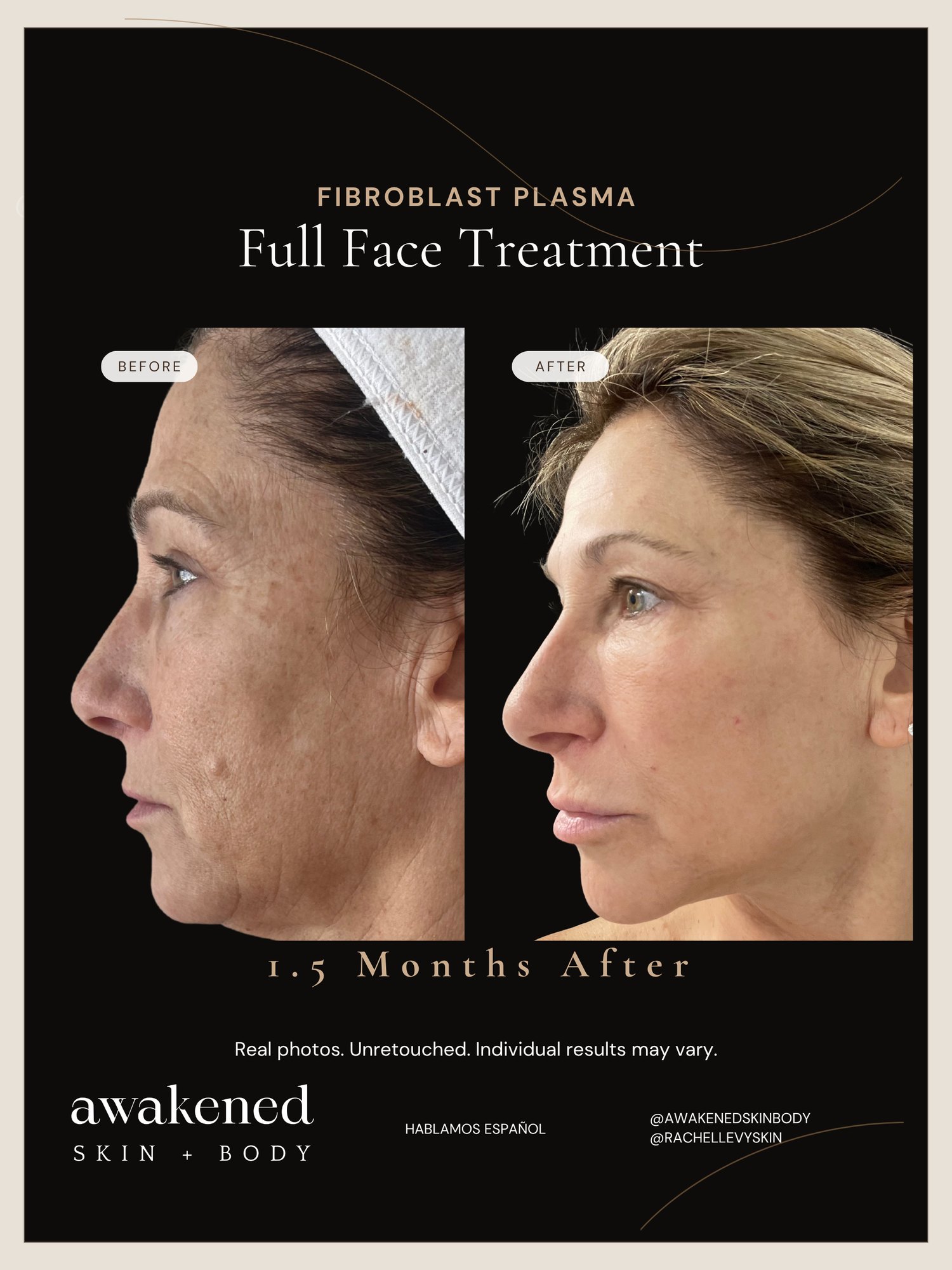
The device creates a tiny electrical arc between its tip and your skin. This arc ionizes the air, forming high-energy plasma that causes instant, controlled micro-injuries on the skin's surface. Your fibroblasts — the cells that produce collagen and elastin — rush to repair these micro-injuries, creating tighter, firmer, renewed skin.

This is the most intensive approach. It produces visible tightening and results can last years. Small dots or crusts form at treatment sites and naturally shed within 5–10 days.

Thermal plasmaPlasma arcPlasma fibroblastPlasma pen

At a glance

SensationMild prickling (numbing applied)
Downtime5–10 days crusting
SessionsOften 1–2 per area
Results last2–3 years
Skin typesFitzpatrick 1–3 ideal
DeviceNuVissa (arc mode)
View Hot Plasma →
Non-ablative · Zero Downtime

Cold Plasma

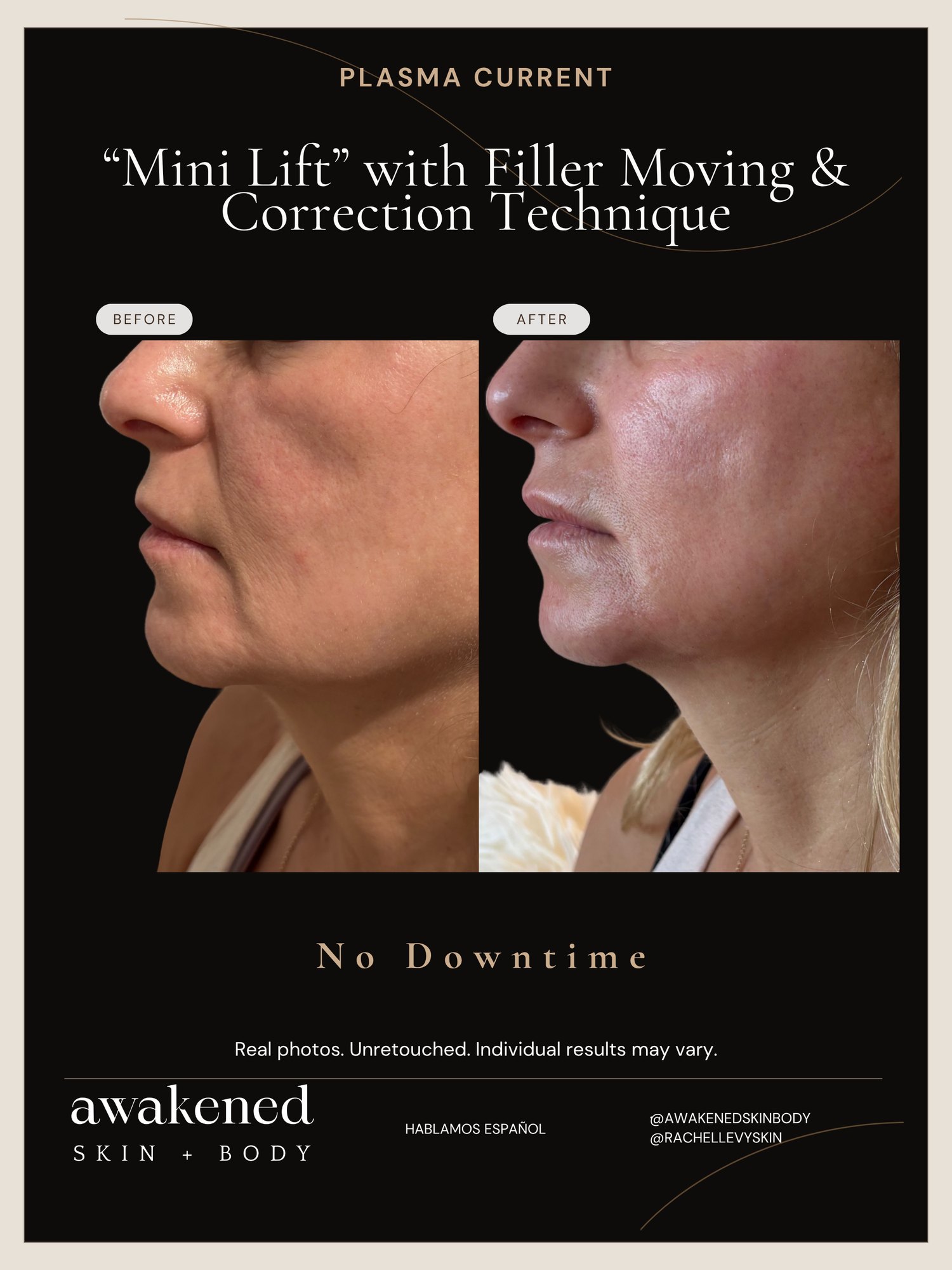
Cold atmospheric plasma (CAP) operates at or near room temperature. Instead of creating micro-injuries through heat, it works by producing reactive oxygen and nitrogen species — highly active molecules that trigger beneficial responses in your skin cells without thermal damage.

Cold plasma is antibacterial, anti-inflammatory, and enhances your skin's ability to absorb active ingredients. No pain, no downtime, safe for all skin types including sensitive and acne-prone skin.

Cold atmospheric plasma (CAP)Non-thermal plasmaCold plasma current

At a glance

SensationComfortable, like a breeze
DowntimeNone
SessionsPackage of 5–10
Results lastOngoing with maintenance
Skin typesAll skin types
DeviceFusionPlasma (cold mode)
View Cold Plasma →
Warm + Cold · 2–3 Day Recovery

Fusion Plasma

Fusion plasma combines the benefits of both worlds. It uses fusion plasma — a gentler form of thermal plasma using argon gas — to resurface and tighten, followed by cold plasma to calm inflammation, sterilize the skin, and accelerate healing.

Warm plasma creates a softer, broader field of energy than traditional hot plasma. Instead of dot-by-dot treatment, it produces an even resurfacing effect — overall glow and texture refinement rather than pinpoint lifting.

Warm argon plasmaFusion plasmaWarm plasma treatment

At a glance

SensationGentle warmth, then cooling
Downtime2–3 days light redness
SessionsSeries recommended
Results last6–12 months
Skin typesMost skin types
DeviceFusionPlasma (both modes)
View Fusion Plasma →
Precision Tools

Two devices —
one for each plasma type.

Cold & Fusion Plasma
FusionPlasma Pro

The FusionPlasma Pro uses noble gases (argon or helium) to generate cold and fusion plasma. It operates through 7 interchangeable precision tips — each engineered for a specific area or concern, from the scalp to the nails to the face.

7 specialized tips
Hyper Plasma Cold · 30–35°C
General skin vitality, collagen stimulation, product absorption, and scalp energizing. Reusable 8–10 times.
Jet Plasma Cold · 50–70°C
Deep surface purification, skin clarity, and overall revitalization. Ideal for brightening and pore refinement. Reusable 20–30 times.
Derma Plasma Warm · 80–140°C
Smoothness, firmness, and elasticity on larger areas. Three tip sizes for precision. Single-use per client for hygiene.
Scalp Plasma Cold · 40–45°C
Scalp vitality, serum absorption, and hair care procedures. Optimizes the environment for follicle reactivation. Reusable 8–10 times.
Silver & Gold Needles Warm · Low thermal
Precision texture refinement, fine line smoothing, and targeted firmness enhancement using fusion plasma needle tips.
Ozone Plasma Cold · Ozone-concentrated
High ozone concentration for antifungal and antibacterial treatment. Nail fungus, deep acne purification, scalp hygiene.
Diamond Plasma Cold · Gentle
Enhances skin elasticity and visible firmness. Promotes tone, texture, and radiance through gentle cold plasma energy.

Rachel selects the appropriate tip per treatment area — the scalp gets a different tip than the eyelids, the nail a different tip than the face.

Hot Plasma · Fibroblast
NuVissa sEL

The NuVissa is a precision plasma pen with a fine tip that generates a controlled electrical arc — the signature technique of fibroblast plasma. Rachel is a Certified National Trainer for this FDA-approved medical-grade device.

Two operating modes
Plasma arc mode
Precision ablative tightening — eyelids, jawline, neck, body. The classic fibroblast "shrink-wrap" effect.
Electrophoresis mode
Non-ablative delivery mode that opens micro-channels to drive serums and actives deep into the skin.
At a Glance

Comparing the
approaches

Hot Plasma
Cold Plasma
Fusion Plasma
How it works
Electrical arc → micro-injuries
Reactive species, no heat
Warm resurfacing + cold healing
Sensation
Mild prickling (numbing applied)
Comfortable, like a breeze
Gentle warmth, then cooling
Downtime
5–10 days (dots/crusting)
None
2–3 days (light redness)
Best for
Lifting, deep tightening
Acne, sensitive skin, hair
Resurfacing, tone, glow
Sessions
Often 1–2 per area
Series of sessions
Series recommended
All skin types?
Fitzpatrick 1–3 ideal
Yes, all skin types
Yes, most skin types

Rachel will recommend the right approach — or combination — based on your skin type, goals, and how much downtime fits your schedule. Many clients start with fusion plasma for overall improvement, then add targeted fibroblast for specific zones like the eyes or jawline.

Find Your Match

Which type is
right for you?

Choose hot plasma

You want significant, lasting lift in specific areas — eyelids, jawline, neck — and can take 6–8 days for recovery.

Visible sagging or hooding
Want surgical-comparable results
Can manage downtime
Fitzpatrick skin type 1–3
Learn more →

Choose cold plasma

You want zero downtime — for maintenance, hair restoration, acne, or as an ongoing series between fibroblast treatments.

Hair loss or thinning
Active acne or rosacea
Sensitive or darker skin tones
No time for downtime
Learn more →

Choose fusion plasma

You want overall resurfacing, glow, and skin texture improvement — with just a few days of recovery.

Uneven skin tone or texture
General lifting and radiance
2–3 days recovery is fine
Want to start before fibroblast
Learn more →
Ready to Choose?

Book a treatment
with Rachel

Not sure which type is right for you? Rachel will assess your skin in person and design the ideal protocol for your goals.

Book Now