5 min read · Awakened Skin + Body · North Miami Beach
The word downtime gets used loosely in aesthetics. For some treatments it means an hour of redness. For Fibroblast it means something specific: carbon dots on your skin for six to eight days that are visible, cannot be covered with makeup, and will draw attention if you are seen in public.
That is not a warning meant to scare you off. Fibroblast remains far less disruptive than the surgical alternatives it competes with. But we believe in setting expectations correctly, so here is what actually happens, day by day.
Numbing cream goes on 40 minutes before the session. During treatment you feel a warm, prickling sensation at each arc point. Immediately after, the area is red and slightly swollen. Think sunburn-level redness, not surgical swelling. Small dark dots, the carbon crusts, sit at each treatment point like tiny dark freckles in a grid.
You can drive home. You can eat normally. You can work the same day if it is remote or you do not mind being seen.
The dots are at their most visible. Swelling peaks around day two, particularly if the eyelid area was treated; eyes can look puffy. The dots themselves do not hurt. They feel tight, like a minor sunburn, and the surrounding skin may feel dry.
The swelling subsides and the dots begin to lift from the skin surface; they are starting to separate. Do not pick them. They need to shed on their own timeline to avoid scarring or pigmentation changes. Most people find this the most psychologically difficult stretch: the dots look obvious, cannot be covered, and you simply have to wait.
This is social downtime in the most literal sense. If you can work from home or step back from public life for a few days, this is the window to do it.
The dots shed naturally. Underneath, the skin is pink and new: slightly sensitive, visibly smoother. Once the last dots fall away, mineral makeup is fine if needed; keep heavy formulations off for a few more days.
Redness at this stage is minimal for most people. Clients with more reactive skin can take until day nine or ten for full resolution. Deeper skin tones should discuss candidacy honestly before booking; that conversation is exactly what the Blueprint is for.
Two Awakened clients agreed to be photographed through every day of their healing, so you can see the honest version instead of imagining a worse one. In about a week you are back, and the skin keeps improving for months.
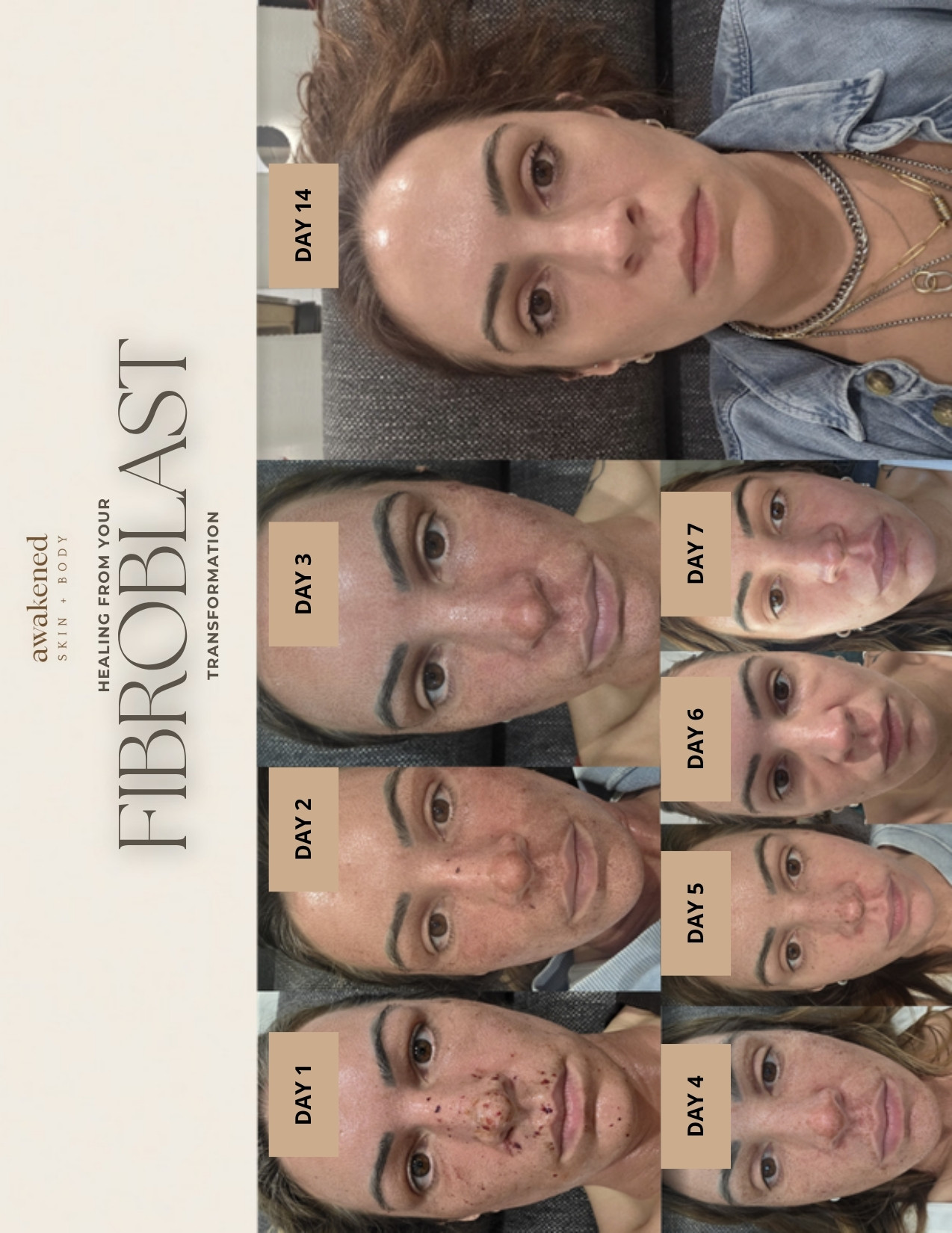
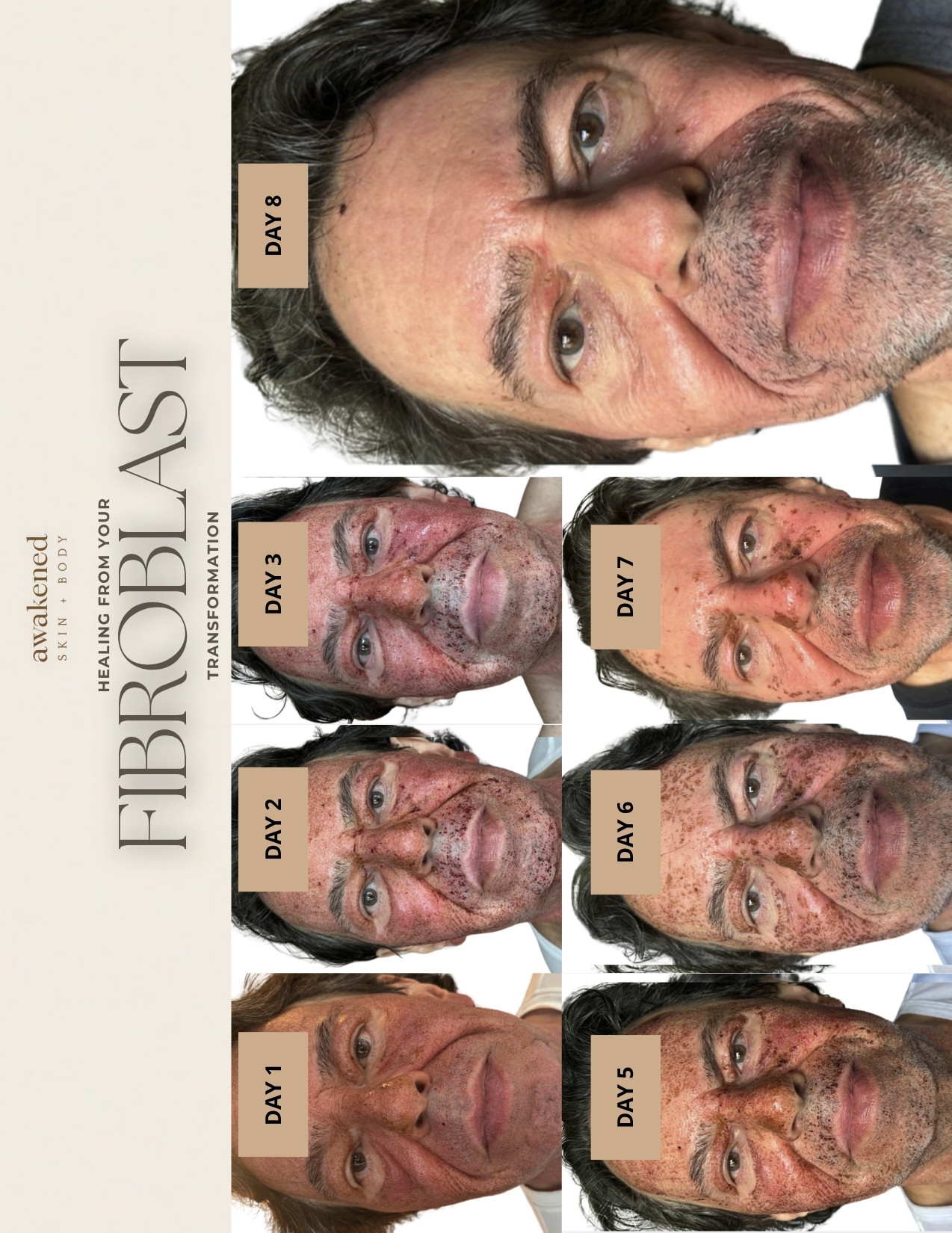
Two things worth knowing before you study them. First, clients with rosacea or autoimmune conditions may feel a pulsing sensation for the first 12 to 18 hours; it passes. Second, there may be days mid-remodel when the skin briefly looks more lined than before. That is the rebuilding, not the result. Every client leaves with a written day-by-day protocol, a NeoGenesis recovery kit, and complimentary aftercare support, so nobody heals alone or guesses.
This is where Fibroblast reveals itself. New collagen matures toward a peak around day 90, and the remodeling continues for up to six months. What looks like a good result at day 14 looks excellent at day 30 and remarkable at day 90. The lift deepens, the texture refines, and the tightening consolidates while you go about your life.
During this period: no direct sun exposure for four to eight weeks, SPF without exception, and no saunas or steam rooms for two weeks.
One week of being less visible, in exchange for a result that lasts until you age past it, with no surgery, no general anesthesia, and no injections. Most people who have done Fibroblast say the downtime was less dramatic than they expected and the result more dramatic than they hoped.
Plan around it. Tell your calendar you have a thing. Use the week to work from home, catch up on shows, and let your skin do its work.
Candidacy, timing, and your calendar, mapped honestly at the Blueprint. Learn more about fibroblast plasma in Miami.